

How Smart Homes Are Shaping the Future of Daily Living sets the stage for this enthralling narrative, offering readers a glimpse into a story that is rich in detail and brimming with originality from the outset.
Smart homes represent the cutting edge of modern living, seamlessly blending technology with daily routines to enhance convenience, efficiency, and security.
Overview of Smart Homes
Smart homes are residences equipped with technology that allows homeowners to control and automate various aspects of their home. These technologies are integrated into everyday devices, creating a connected environment that enhances convenience, efficiency, and security.
Examples of Smart Devices
- Smart Thermostats: Devices that regulate home temperature based on user preferences and schedules, optimizing energy use.
- Smart Lighting: LED bulbs that can be controlled remotely through a smartphone app, allowing users to adjust brightness and color.
- Smart Security Cameras: Cameras equipped with motion sensors and night vision, providing real-time monitoring and alerts to homeowners.
- Smart Appliances: Appliances such as refrigerators, ovens, and washing machines that can be controlled and monitored through a mobile app.
Benefits of Smart Homes
- Convenience: Smart homes allow users to control devices remotely, create schedules, and automate routines, making daily tasks easier and more efficient.
- Efficiency: By optimizing energy use and monitoring resource consumption, smart homes help reduce utility bills and environmental impact.
- Security: Smart devices like cameras, doorbells, and locks enhance home security through real-time monitoring and alerts, deterring potential intruders.
Automation and Control Systems
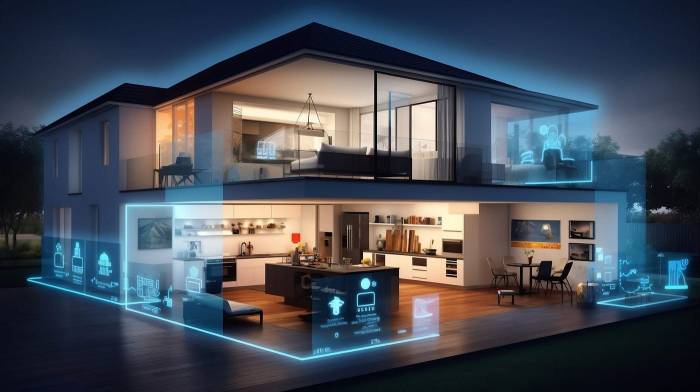
Automation and control systems play a crucial role in smart homes, allowing residents to manage various functions with ease. These systems enhance daily routines and simplify tasks, providing a seamless and convenient living experience.
Voice Control
Voice control is a popular automation system in smart homes, enabling users to operate devices and appliances using voice commands. Virtual assistants like Amazon Alexa and Google Assistant respond to voice prompts, allowing residents to control lighting, thermostats, music, and more hands-free.
Mobile Apps
Mobile apps provide another effective way to control smart home devices remotely. By using dedicated apps on smartphones or tablets, residents can adjust settings, monitor security cameras, and receive alerts from anywhere. These apps offer convenience and flexibility, giving users the ability to manage their homes on the go.
Centralized Hubs
Centralized hubs serve as the brain of a smart home, connecting and controlling various devices through a single interface. Hubs like Samsung SmartThings and Apple HomeKit enable seamless integration of different products, allowing users to create customized automation routines and scenes.
With centralized hubs, residents can enjoy a cohesive and interconnected smart home experience.
Connectivity and Integration
In a smart home ecosystem, connectivity plays a crucial role in ensuring that all devices can communicate with each other seamlessly. This interconnectedness enables automation and control systems to work together efficiently, enhancing the overall smart home experience.
Importance of Connectivity
One of the key aspects of smart homes is the ability of different devices to communicate and work in harmony. For example, a smart thermostat can communicate with smart lights to adjust the lighting based on the temperature settings. This level of connectivity creates a more convenient and efficient living environment for users.
How Devices Communicate and Work Together
Devices in a smart home ecosystem often communicate through wireless protocols such as Wi-Fi, Zigbee, Z-Wave, or Bluetooth. For instance, a smart lock can be integrated with a security camera to allow for remote monitoring and access control. This seamless integration enhances home security and provides peace of mind to homeowners.
Role of Integration Platforms
Integration platforms like smart assistants act as the central hub that connects various smart devices in a home
For example, a smart assistant can coordinate the operation of smart speakers, thermostats, and lights to create a personalized home environment tailored to the user's preferences.
Energy Efficiency and Sustainability
Smart homes play a crucial role in promoting energy efficiency and sustainable living practices. By utilizing advanced technology and automation, smart homes help reduce energy consumption and lower carbon footprints.
Smart Thermostats
Smart thermostats are key components of energy-efficient smart homes. These devices can learn user preferences and adjust heating and cooling settings accordingly. By optimizing temperature control based on occupancy and weather conditions, smart thermostats help reduce energy waste and save on utility bills.
Smart Lighting Systems
Smart lighting systems allow users to control the brightness, color, and timing of lights remotely. By using LED bulbs and automated scheduling, smart homes can significantly reduce electricity usage for lighting. Motion sensors and smart switches further enhance energy efficiency by ensuring that lights are only used when needed.
Smart Appliances
Smart appliances, such as refrigerators, washers, and dryers, are designed to operate more efficiently than their traditional counterparts. These appliances can adjust settings based on usage patterns, energy prices, and load demand. By using energy-saving modes and optimizing cycles, smart appliances contribute to overall energy conservation in smart homes.
According to a study by the American Council for an Energy-Efficient Economy, smart homes can reduce energy consumption by 10-25% on average.
Security and Privacy
Smart homes offer advanced security features to protect residents' properties and ensure their privacy. These systems include surveillance cameras, smart locks, and motion sensors that help monitor and control access to the home.
Surveillance Cameras and Smart Locks
- Surveillance cameras provide real-time monitoring of the home, allowing residents to check on their property remotely through their smartphones or other devices.
- Smart locks offer keyless entry options, enabling residents to lock and unlock their doors using a smartphone app or a unique access code.
- Integration of surveillance cameras and smart locks enhances the overall security of the home by providing a comprehensive monitoring and access control system.
Privacy Concerns and Data Collection
- Smart devices in homes collect data on residents' habits, preferences, and daily routines to optimize the automation and control systems.
- There are concerns about the potential misuse of this data by third parties or hackers, leading to privacy breaches and unauthorized access to personal information.
- Residents should be aware of the data collected by their smart home devices and take steps to secure their networks and devices to prevent any privacy infringements.
Tips for Ensuring Security and Privacy
- Regularly update the firmware and software of smart devices to patch any security vulnerabilities and protect against cyber threats.
- Use strong, unique passwords for each smart device and network to prevent unauthorized access to the system.
- Enable two-factor authentication whenever possible to add an extra layer of security to the smart home network.
- Review and adjust privacy settings on smart devices to limit the collection and sharing of personal data with third parties.
- Monitor network activity and device connections to detect any unusual behavior that may indicate a security breach.
Summary
In conclusion, the future of daily living is clearly intertwined with the evolution of smart homes, promising a lifestyle that is not only advanced but also sustainable and secure. As technology continues to innovate, smart homes will undoubtedly play a pivotal role in shaping how we live and interact with our living spaces.
Key Questions Answered
How do smart homes impact energy efficiency?
Smart homes contribute significantly to energy conservation by using smart thermostats, lighting systems, and appliances designed for optimal energy efficiency.
What are some common security features in smart homes?
Security features in smart homes include surveillance cameras, smart locks, and advanced alarm systems to ensure residents' safety.
How do smart devices communicate and work together in a smart home ecosystem?
Smart devices in a smart home ecosystem communicate through integration platforms like smart assistants to create a seamless and interconnected environment.